Affordability could hit historic levels

Affordability could hit historic levels

In this quick speed read, we look at affordability as interest rates rise!

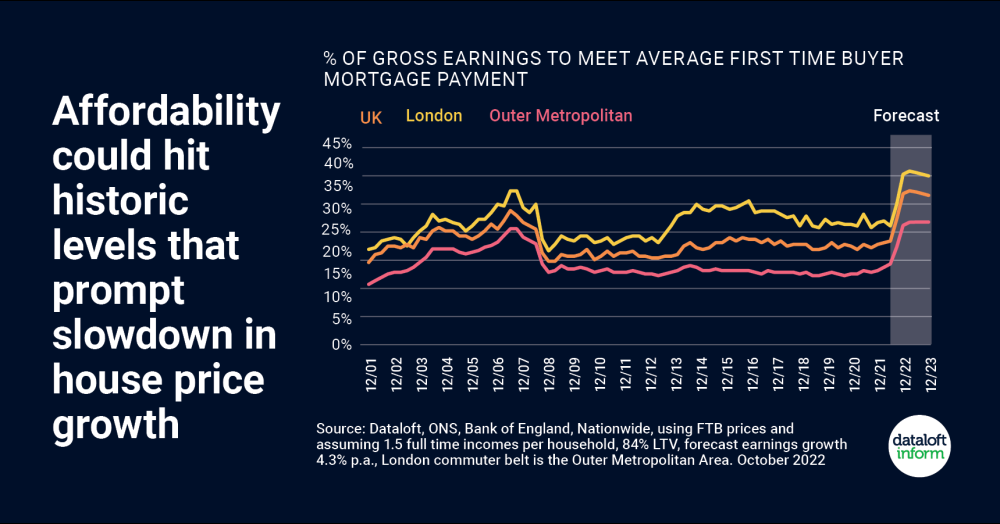
  • Significant rises to mortgage interest rates will mean fewer first time buyers able to get on the housing ladder. New borrowers won’t have the luxury of existing low rates.
  • We tracked ‘affordability’ over the past 20 years – based on the proportion of gross income needed to meet mortgage payments. Interest rate rises drive up monthly payments.
  • While it is possible that interest rates will subside if the financial markets settle, it seems unlikely and the expected rise takes affordability to levels that normally trigger a slowdown in house price growth and transactions.
  • In London, the average first time buyer will need another £500 pcm if mortgage rates rise to 6% as forecast. That comes on top of a similar increase earlier this year.
  • Outside the more expensive parts of the UK housing market, there may be more headroom to afford interest rate increases.
  • Source: Dataloft, ONS, Bank of England, Nationwide


Get in touch with us

The latest data suggests housing affordability is quietly improving, but the real story lies beneath the headlines. It’s not just about house prices versus earnings, it’s about what buyers actually pay each month. And when you look at it that way, the picture may surprise you… read the article to learn more.

A chance to acquire a plot of just under two-thirds of an acre with demolition of the existing uninhabitable cottage and planning permission for two detached, two-storey dwellings with single garages. Alternatively a renovation of the existing dwelling. This is offered for sale through the Modern Method of Auction which is operated by Iamsold Ltd.

As we move through May 2026, buyers are seeing more homes come to market, but affordability still matters. Here is what today’s mix of greater choice, steady demand and higher mortgage costs means if you are planning a move.

In 2025, £344bn was spent on property across Great Britain and Northern Ireland. Follow the money and the market’s geography becomes clear. Some regions dominate, others quietly punch above their weight. It’s a powerful reminder that the UK property market isn’t one story, but many regional economies moving at different speeds.