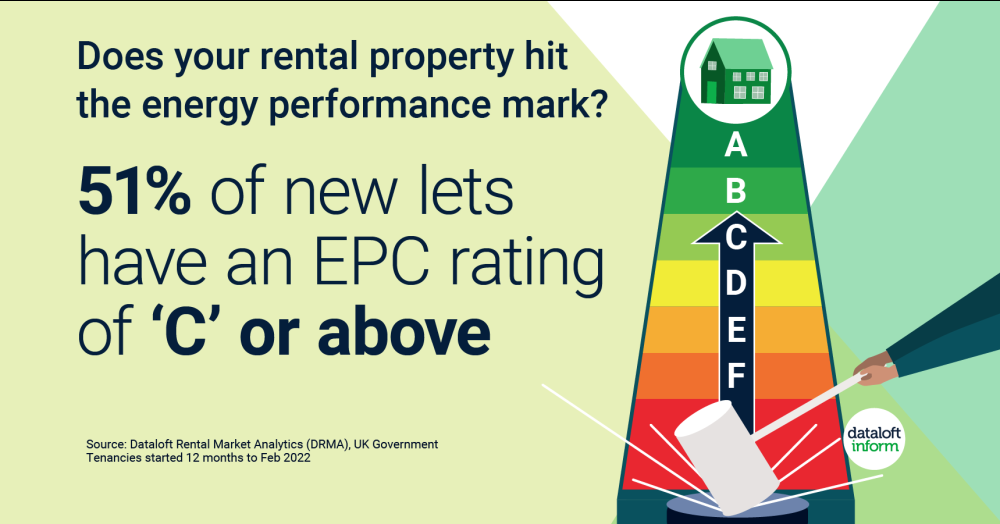
Does your rental property hit the energy performance mark?

Does your rental property hit the energy performance mark?

In this article we look at the forthcoming changes to EPC's and what this means to Landlords and Mortgage Lenders.

  • Government targets state that by the end of 2025 new lets will require an Energy Performance Certificate (EPC) rating of band C or above.
  • Just over half (51%) of all rental properties let out over the last 12 months had an EPC of band C or above, virtually unchanged on the previous 12 months.
  • Mortgage lenders have new requirements too. They must ensure that the average performance of their domestic portfolios is at least EPC band C, by 31 Dec 2030.
  • Landlords will not be expected to pay more than £3,500 +VAT on energy efficiency improvements.
  • Source: Dataloft Rental Market Analytics (DRMA), UK Government – tenancies started 12 months to Feb 2022


Get in touch with us

The "Generation Rent" narrative is shifting. New data shows under-35 homeownership jumped from 31% to 42% in a decade, while it actually fell for those aged 35-64. While affordability is still a hurdle, the dream of owning a home is far from dead for the youth. Is "Generation Rent" getting older? We explore the changing property landscape.

A delightful 2-bedroom modern cottage-style mid-terrace cottage in a desirable mews location in well served village of East Harling. Featuring a cosy sitting room, a well-appointed kitchen/breakfast room, and an enclosed patio garden with off-road parking, it offers comfortable living in a pleasant non-estate village setting.

Ignore the crash headlines. Attleborough’s market is adjusting, not collapsing. With local unemployment at 2.3% and 46.9% of homes already sold (SSTC), demand remains resilient. Sales take an avrge 87 days—a return to a normal market where pricing is key. It’s a slow adjustment, not a disaster. Discover why the 'supertanker' is simply slowing down.

One of the biggest influences on Attleborough's future property market may not be first-time buyers or growing families, but child free couples. As their lifestyles and housing needs evolve, this often overlooked group could play a significant role in shaping future demand, supply and local moving patterns.