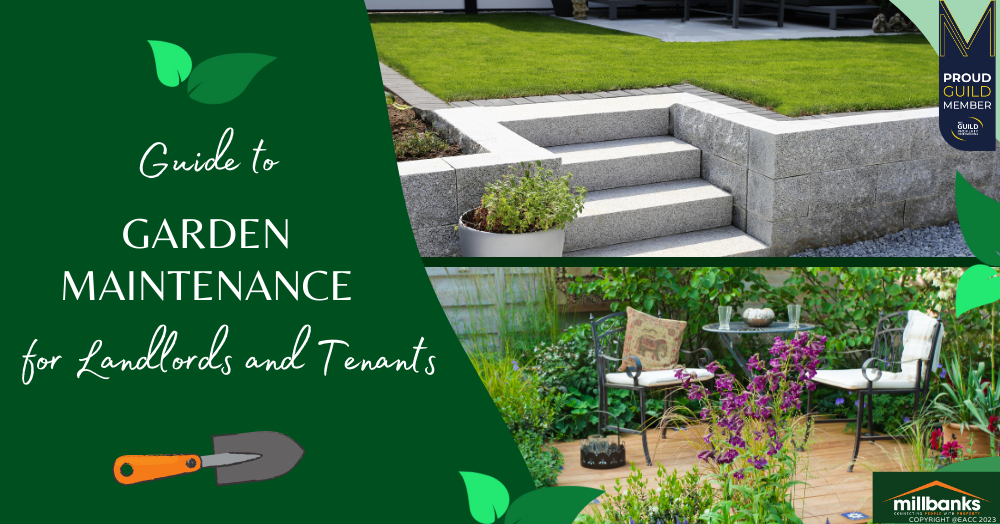
Garden Maintenance: Tenant and Landlord Responsibilities Explained
Garden maintenance can be a thorny issue between tenants and landlords, so here’s a useful guide to help avoid confusion.
Now that spring is here, there are lots of tasks to be done in the garden, such as watering, weeding and mowing.
But if the garden is part of a rental property, who is responsible for doing them?
That’s a question that has vexed many tenants and landlords over the years (garden maintenance is the cause of about a quarter of all deposit disputes*).
So, here’s an outline of responsibilities for maintaining outdoor areas at a rental property.
But first… a disclaimer
This article provides a general overview of common issues; it does not constitute legal advice. If you’re in any doubt about what’s expected of you, always refer to your tenancy agreement.
Tenant responsibilities
It’s up to the tenant to keep the garden in a good condition and ensure that at the end of the tenancy, it’s in the same state as it was at the start. This means:
• Removing rubbish.
• Doing simple tasks like weeding and sweeping up leaves.
• Watering (if there are healthy plants when you move in, they should still be alive when you move out).
• Ensuring shrubs and lawns don’t get overgrown.
• Repairing any damage that you’ve caused during the tenancy. For example, if you break an item of garden furniture, you need to fix it.
Other key points
• If you’re green-fingered and want to make changes to the garden, discuss this with your landlord first.
• A landlord is not obligated to provide gardening equipment; however, they may supply items like brooms or trowels to help you with maintenance.
• If you’re uncertain about what state the garden was in when you moved in, look back at your check-in report for a detailed description.
Landlord responsibilities
The landlord is responsible for big jobs that require specialist training, such as:
• Lopping branches off tall trees.
• Replacing damaged fences.
• Fixing a shed roof.
• Repairing walls or fences.
• Pest and insect control (unless it’s clear that the tenant has caused the problem). So, if there’s a serious issue with bees or wasps, the landlord is responsible for ensuring the health and safety of the tenant.
Other points
• Consider minimising possible causes of friction by planting low-maintenance, drought-resistant plants and removing structures such as greenhouses.
• Look at outdoor areas when you carry out periodic inspections so if there are any issues, you can raise them early.
Contact us here at Millbanks today to learn more about our property management services.
* The Dispute Service.