Homes are moving faster since lockdown

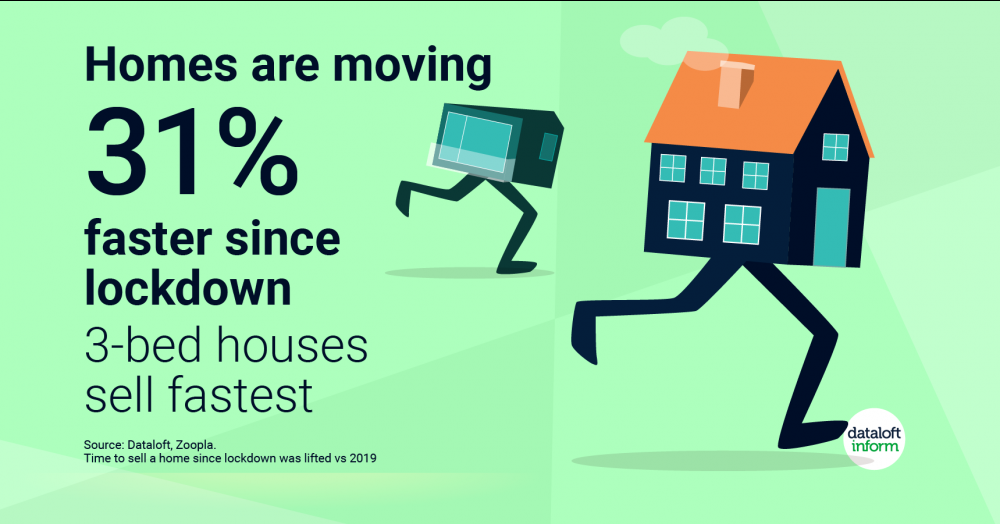
Homes are moving faster since lockdown

In this short article we take a look at how quickly homes are selling since lockdown

  • The time to sell a home has fallen by more than a quarter in the UK. No surprise considering buyer demand, since the start of the year, is +34% higher than over the same period in 2019.
  • The number of days between first marketing a home to receiving an offer is on average, since lockdown was lifted, 27 days. This is -31% lower than the same time period in 2019.
  • Time to sell varies by property type, at present, 3-bed houses sell the fastest, 24 days. 1-bed flats take the longest to sell, 34 days.
  • Time to sell has decreased as a result of available supply falling short of buyer demand. 4 and 5 bed houses are now selling 16 days faster, the biggest decrease seen. Source: Dataloft, Zoopla


Get in touch with us

January 2026 showed a market regaining momentum. Across much of the UK, sales agreed are running ahead of two years ago, led by the Midlands and East. Scotland and Wales are also strengthening. London remains mixed, and Northern Ireland softer. This is not a boom, but a steady, broad based rebuild driven by realistic pricing.

This heat map uses census data to show where Attleborough residents work longer hours, revealing clear differences in working patterns across the town. By understanding how work-life balance varies between neighbourhoods, we gain useful insight into local lifestyles and the factors shaping our community.

If you are planning to sell in Attleborough, timing depends on more than luck. Property type, bedroom count, pricing and marketing all shape the outcome. Some homes attract swift interest, while others linger. Understanding local trends and launching at the right price from day one can make the difference between a smooth move and a stalled sale.

Something significant is shifting on our streets, and most people have not noticed. Nearly one in five UK homes is now privately rented, quietly reshaping communities like Attleborough. Who is driving this change, and what does it mean for prices, demand, and neighbourhood life? The answers may surprise you.