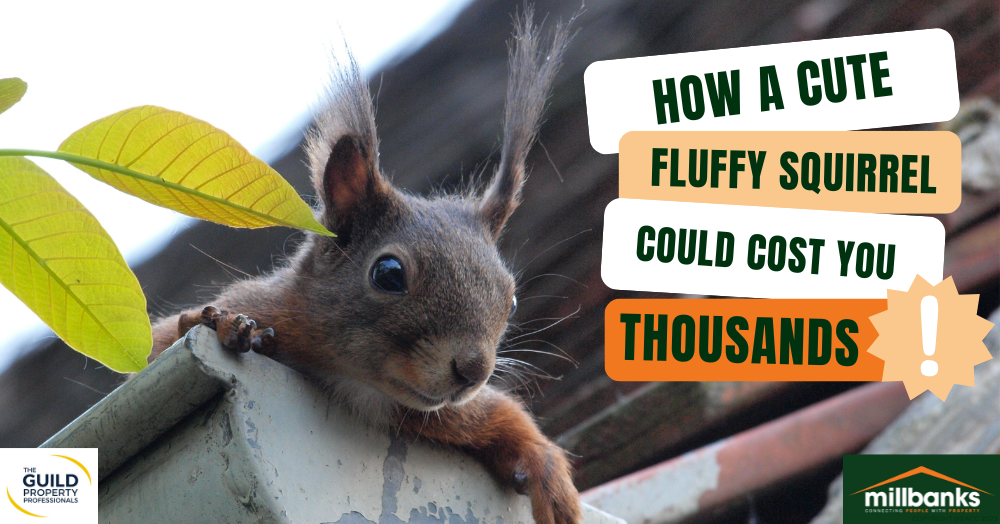
How a Cute Fluffy Squirrel Could Cost You Thousands
What’s cute, has a bushy tail and could cause thousands of pounds worth of damage to a rental property? Unfortunately, as sweet as they may seem, squirrels and their nests can be a nightmare for landlords and tenants.
Once those little grey beasts make themselves at home in a property, you’ve got trouble ahead. A report by general insurers LV= found that claims caused by squirrel infestations jumped up by 51% last year.
Why do the furry critters do so much damage? Squirrels’ teeth never stop growing, so they chew and chew and chew some more to file their gnashers down. And when they’ve got their teeth clamped around electrical wires or wood beams – the results can be disastrous.
And squirrels aren’t the only culprits – other vermin, such as rats and mice, can also cause problems. So how can landlords and tenants prevent vermin infestation? Both parties have roles to play.
Seal entry points
Animals are opportunists – if they can get in, they will. But landlords can stop them in their tracks by sealing any points of entry into the property and covering chimneys using metal flashing. Tenants can generally be more vigilant with open windows and doors in the warmer months.
Don’t offer them a banquet!
If bins aren’t closed properly, you’re basically offering vermin an all-you-can-eat free buffet, and it’s only a matter of time before they head inside to see what else is on offer. Tenants should ensure bin lids are shut tightly and keep the bin area clean. Also, rinse off recyclables such as plastic bottles and pots before placing them in the recycling bin.
Crumbs away
It’s vital tenants wipe kitchen surfaces and sweep the floor, as tiny toast crumbs, bits of rice and other food morsels will be a huge lure for hungry rodents and ants. Avoid leaving dirty dishes around the house, as food residue will give those little pests the green light to come in and explore. Store all food in cupboards or the fridge.
In the garden
A compost heap is a rodent’s idea of free sheltered accommodation. Mice, rats and squirrels love the insulation it offers, plus it’s a free food source. So, if there’s a compost bin, it should be covered.
Landlords should also trim back trees or overhanging branches so rodents can’t get to the upper levels of a property.
Act quickly
If you’re a tenant and suspect you’ve got an infestation, contact your landlord immediately. Your landlord should respond promptly and get the professionals in. The sooner the problem is sorted, the better.
To learn more about our property management services, contact us here at Millbanks today.