How big is the average UK home?
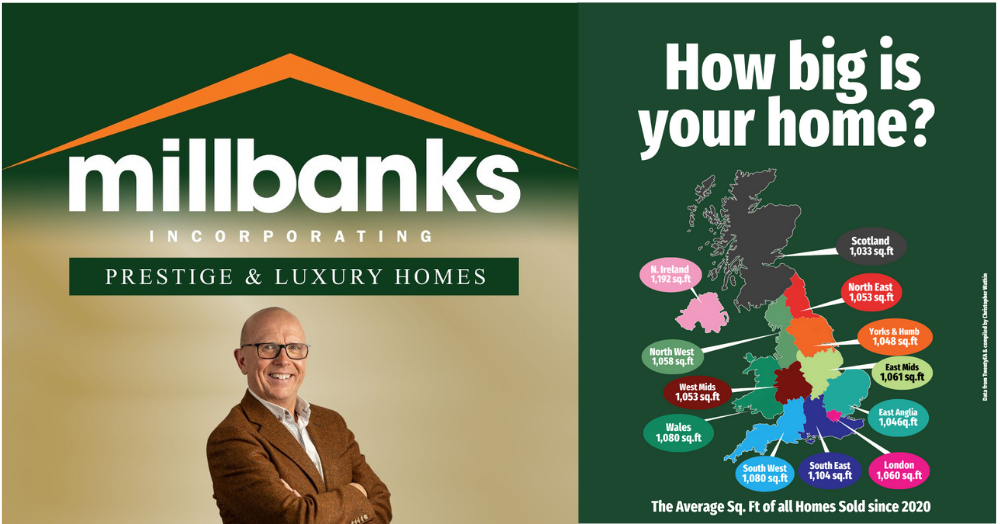
This map highlights the average size of homes sold across the UK since 2020, measured in square feet from completed sales. What stands out is how little the averages vary between regions, despite very different housing types. Northern Ireland is the clear exception, with noticeably larger homes on average.
This map shows the average size of homes sold in each region of the UK since 2020. The figures are in square feet and based on completed sales. When you look at the spread of results, the first thing that stands out is how similar most regions are. Given the wide kaleidoscope of different property types across the UK, from terraces to detached homes to apartments, the average size hardly moves at all. The main exception is Northern Ireland, where homes are noticeably larger on average.
Largest average home sizes to smallest:
1. Northern Ireland: 1,192 square feet
2. South East: 1,104 square feet
3. Wales: 1,080 square feet
4. South West: 1,080 square feet
5. East Midlands: 1,061 square feet
6. London: 1,060 square feet
7. North West: 1,058 square feet
8. North East: 1,053 square feet
9. West Midlands: 1,053 square feet
10. Yorkshire and Humber: 1,048 square feet
11. East Anglia: 1,046 square feet
12. Scotland: 1,033 square feet
There is only around 50 to 80 square feet between many regions, which is roughly the size of a small bedroom. That is surprisingly close considering the variety of landscapes, building ages and local planning styles.
For Attleborough homeowners thinking about their next move, this is a reminder that comfort is often less about raw size and more about layout, storage, daylight and how well a home suits your lifestyle. Space is about how it feels to live in it, not only the number on the tape measure.
If you'd like to find out what your home might be worth in 60 Seconds, please 'click' the banner ad below