How does rising inflation affect house prices?

How does rising inflation affect house prices?

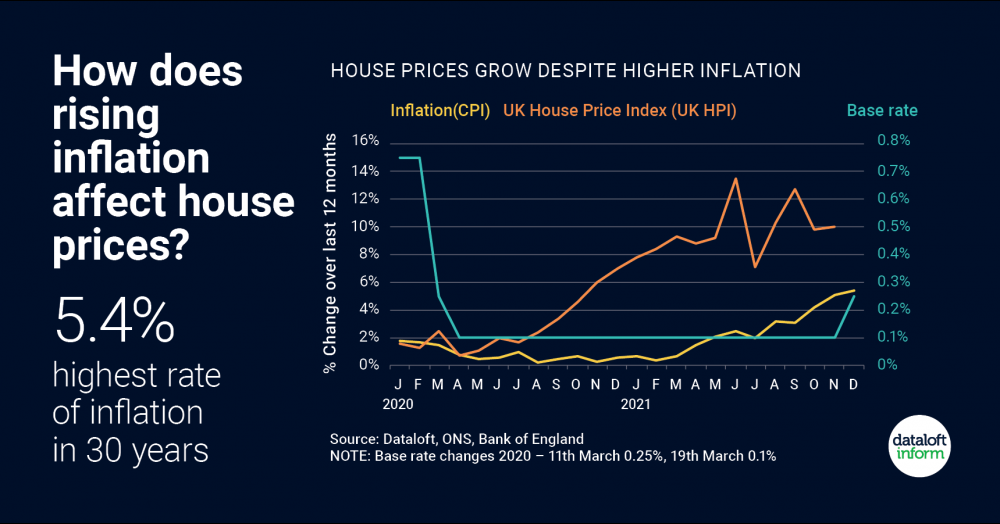
We take a quick look at how rising inflation can affect house prices

  • Consumer price inflation (CPI) has risen to 5.4% in the 12 months to December 2021. This is the highest rate in 30 years, but is expected to fall back after an April peak (ONS).
  • Energy costs are a major component of price rises and this is likely to turn the spotlight on energy efficient homes.
  • The key driver of house prices and affordability is interest rates, which are expected to remain low in the long term, despite a small rise to 0.5% widely expected in February.
  • Other drivers of demand, which are expected to continue, are lifestyle changes and deposits saved during the pandemic.
  • Source: Dataloft, ONS, Bank of England


Get in touch with us

With Easter just around the corner, now is a strategic moment to prepare your home for market, before buyer demand peaks and properties move fastest.

A delightful two-bedroom home with an open front outlook over open greensward, lounge features a cosy open fireplace, a sleek kitchen/diner flowing into an outside garden room, modern bathroom, generous storage, low-maintenance garden and private parking. Warm, stylish and ready to enjoy.

Recent data shows homes are taking longer to sell than 18 months ago, with only around half achieving a sale. Realistic pricing from day one is crucial to attract interest, maintain momentum, and avoid delays or reductions, ensuring a smoother, more successful sale in today’s market.

As 2025 draws to a close, this report examines how the UK and Attleborough property markets have performed and what may lie ahead in 2026. By comparing listings, sales, and prices with previous years, it reveals a market driven more by activity and confidence than by rising house prices.