Lockdown savings

Lockdown savings

In this short article we take a quick look at household savings during the pandemic

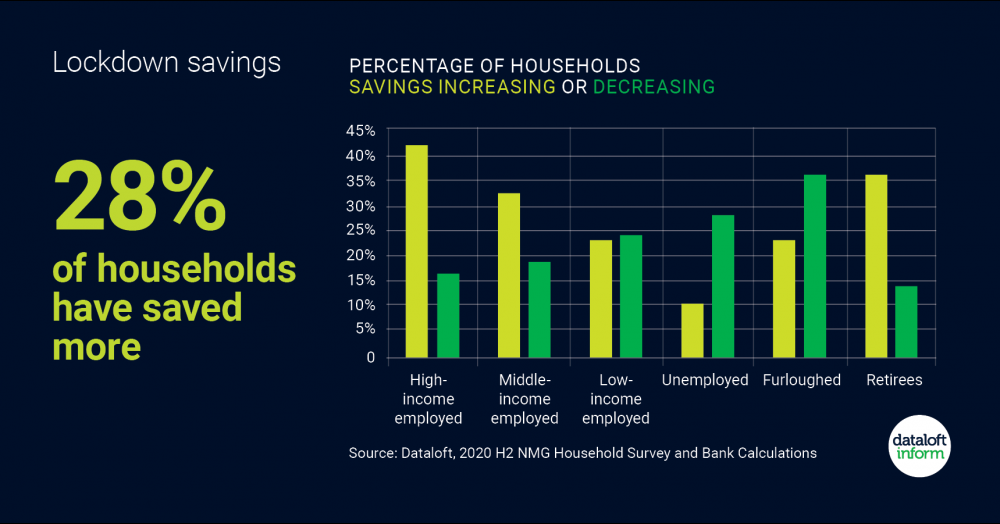
  • The pandemic reduced spending for many households and government policies have helped support incomes. This has led to 28% of households saving more during the pandemic.
  • 42% of high-income employed households saved more during the pandemic compared with 22% of low-income employed households. Retirees also saved more, 36% had increased their savings.
  • Which households have saved more and what those households plan to do with their savings will impact the housing market.
  • Households who have saved more could continue to support the higher levels of transactions and prices seen since May 2020. Source: Dataloft, 2020 H2 NMG Household Survey and Bank Calculations


Get in touch with us

Rental demand remains resilient in early 2026, but growth has moderated. For landlords, spring is less about reacting and more about refining strategy.

The age of a home shapes far more than its appearance. It influences value, demand, running costs and buyer appeal. Across the UK, housing stock spans generations, each with its own strengths and trade offs. Understanding where your home fits is key. Please read the article to learn more

The early months of 2026 suggest a UK housing market finding its rhythm, with buyer activity strengthening across most regions. While growth varies from place to place, the wider picture is one of steady progress rather than sharp change. To learn what this means closer to home, read on.

Over the past 25 years, UK house prices have risen significantly, quietly building wealth for homeowners along the way. While markets move in cycles, the long-term trend remains clear. For many households, their home has become one of the most consistent and powerful drivers of personal wealth.