Single family housing

Single family housing

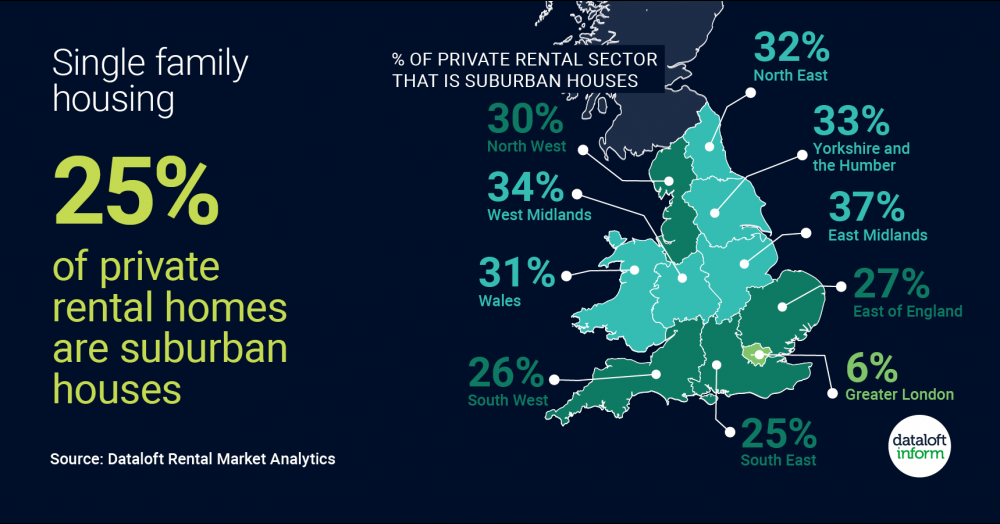
In this short article we take a look at the percentage of property in the Private Rental Sector that are Suburban Houses

  • Across England and Wales, almost half (43%) of all private rental sector properties (both houses and flats) fall within Dataloft's definition of suburban areas, 41% urban and 16% rural.
  • Suburban renters are more likely to live in houses (58%) than urban renters (32%). As an overall proportion of the private rental sector, suburban houses (single family housing), currently represent 25%.
  • The proportion of suburban houses varies greatly between regions. London has the lowest proportion, 6%, and the East Midlands has the highest, 37%.
  • Suburban renters differ to urban renters, they are more likely to be families (27%) than urban renters (20%). They are generally older than urban renters and are less likely to work in tech, media, finance and professional services (30%) than urban renters (42%). Source: Dataloft Rental Market Analytics


Get in touch with us

In today's property market, the temptation to 'test the market' with an ambitious asking price can be strong if you're not in any particular hurry to sell. However, this strategy often backfires, costing vendors valuable time, credibility, and ultimately, money. Let's explore why.

Timing can make or break a house sale. New Attleborough property market data reveals why the first few weeks are critical, how overpricing can cost sellers valuable buyers, and why homes that sell quickly are far more likely to complete. The numbers tell a powerful story. Click the link to learn more...

More homes are competing for buyer attention, so sellers need more than a hopeful asking price. A smart launch, realistic valuation and strong presentation can help attract serious interest.

The rental market remains active in May 2026, but conditions are changing. Demand is still strong, rent growth has eased, and tenant expectations are rising. Here is what landlords should be thinking about now.