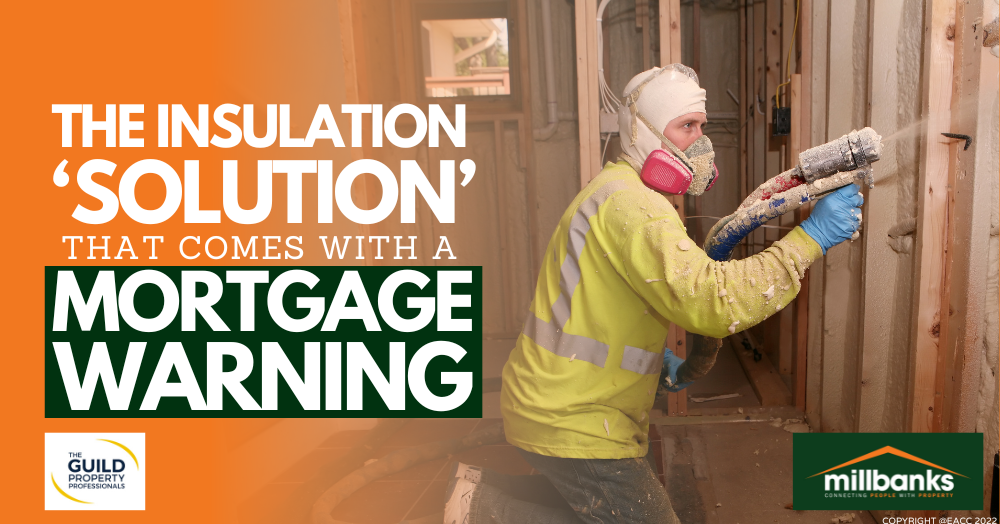
The Insulation ‘Solution’ That Comes with a Mortgage Warning
Get it right, and insulation can add value to your home. Get it wrong, and it could be difficult to get a mortgage for your property. Read on to find out why.
With energy prices sky-high and global warming a pressing issue, many homeowners are looking to insulate their homes.
While there are many benefits associated with insulation, one issue you should consider before committing to work at your property relates to a product called polyurethane foam, also known as spray foam. It is power-sprayed in liquid form, often in lofts and walls, where it then expands and sets.
Spray foam has been on the market for decades, and because it is relatively quick to install and can be used in hard-to-reach places, it is in hundreds of thousands of homes in the UK.
However, because of the problems associated with it, many lenders will not approve a mortgage on a property with spray foam (especially in the roof). Let us explain why.
The two most common types of spray foam are:
Closed cell: this is rigid when it sets and has high insulation values. However, because it blocks moisture, it can cause condensation. This can lead to wooden beams decaying.
Open cell: this has a soft and flexible texture when set. It’s less dense than closed cell spray, so you need more of it. However, it is permeable to vapour.
Given the potential for things to go awry, great care is needed during the installation process. However, Alan Milstein, Chairman of the Residential Property Surveyors Association (RPSA), says many spray foam installations are “poorly executed and without proper consideration of moisture management within the property, leaving structural roof timbers at risk of damage or failure.”
As a result, the RPSA’s guidance to surveyors is to “recommend removal of spray foam insulation in every property they visit”.
Issues have also been raised surrounding cold-calling of vulnerable homeowners and mis-selling.
Homeowners left in a tight spot
Often, homeowners are unaware of the problems associated with spray foam until they try to sell up and discover that lenders are unwilling to provide a mortgage for their property.
Their only resort is to remove the spray foam, a process that can cost thousands of pounds – sometimes more than the original installation costs. There’s also a risk that you discover major issues with rotting beams when the foam comes out.
Demands for tighter regulation
The RPSA, the Royal Institute of Chartered Surveyors and the Property Care Association are calling for greater regulation of the spray foam insulation industry. While this is yet to happen, homeowners are warned to never agree to installation at short notice or under duress, and to carefully consider the ramifications on their property’s mortgageability before they act.
From all of us here at Millbanks, thanks for reading.
To learn and seek advice about the different selling strategies we use for selling homes in a difficult market, then please contact us here at Millbanks on (01953) 453838 or email info@millbanks.com
"We have been selling homes for nearly 40 years and have lots of industry-wide experience for providing great selling and marketing advice for difficult markets"