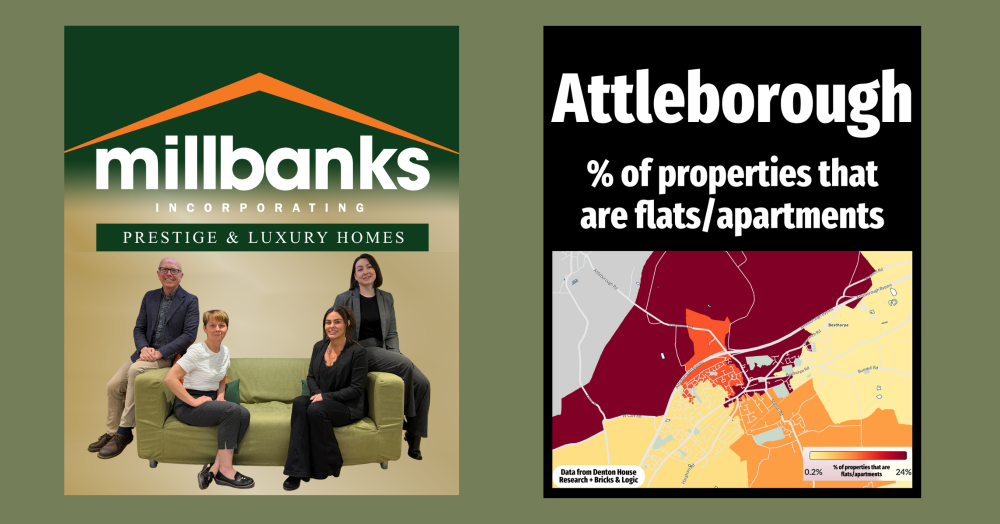
This Map Shows Where Attleborough's Flats Actually Are
At first glance, Attleborough looks like any market town. Look closer and its housing tells a richer story. This map reveals where flats cluster near the centre and key routes, and where houses dominate the outskirts. From apartment pockets to house only estates, it shows that Attleborough is not one market, but several shaped by property type.
At first glance, Attleborough looks like many other market towns. Scratch beneath the surface and the pattern of homes across the town tells a far more interesting story.
This map shows the percentage of homes in Attleborough that are flats or apartments, broken down by neighbourhood. The darker the red, the higher the proportion of apartments. The lighter yellows indicate areas dominated by houses. Where the map turns grey, there are effectively no flats or apartments at all.
One thing jumps out immediately. Apartments in Attleborough are not evenly spread. They cluster closer to the town centre and along key routes, where Victorian conversions, purpose built blocks, and modern developments naturally gravitate. These areas tend to suit smaller households, renters, and people who value walkability and access to shops, stations, and services.
Move further out and the colours soften quickly. The yellow areas reflect neighbourhoods where traditional houses dominate, often with gardens, driveways, and a more family focused feel. These are places shaped by post war and modern estate development rather than vertical living.
The grey patches are just as telling. These are pockets of Attleborough where flats and apartments are virtually non existent. They are pure house territory, often made up of estates built with one clear buyer in mind, families and long term owner occupiers. For buyers, sellers, and landlords, this matters more than many realise.
For homeowners, it explains why demand, pricing, and buyer profiles vary so sharply from one part of Attleborough to another. For landlords, it highlights where apartment stock is concentrated and where it simply does not exist. And for anyone thinking about development or conversion, it quietly shows where the market has already spoken and where it has not.
Attleborough is not one housing market. It is several, stacked side by side, and this map is a neat reminder that location is not just about postcode, it is about property type too.
If you'd like to find out what your home might be worth in 60 Seconds, please 'click' the banner ad below