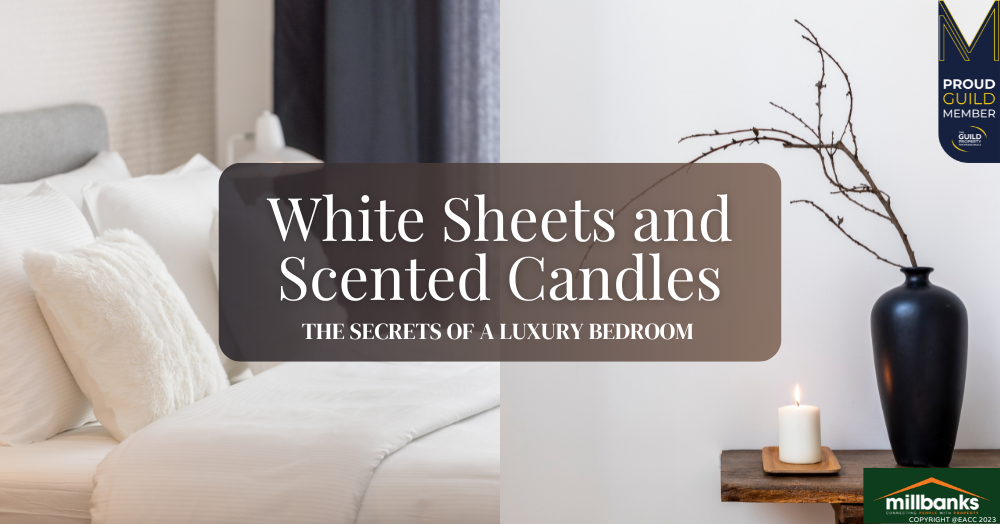
White Sheets and Scented Candles – The Secrets of a Luxury Bedroom
It’s estimated that the average person spends 26 years of their life asleep and nearly seven years trying to get to sleep, so your bedroom needs to be somewhere you really want to spend your time.
Your bed and its surroundings should be comfortable and enticing. Think of a luxury hotel – their whole business relies on good sleep, a restful environment, and feelings of relaxation.
So, if your bedroom needs an overhaul, why not create your own five-star sleep retreat? We’ve looked at some ways to give your bedroom that luxury feel.
1) Bed basics
A good quality mattress and plush pillows are the first step to a luxury bedroom. If you’re going to spend any money at all, then these are the things you should really splash out on. Get yourself to a bed shop and try out the mattresses. Do you want something firm and supportive or soft and cosy? Don’t be shy, definitely try before you buy. Once you’ve got the foundation right, everything else is easy.
2) All white
While you might not want to pay out for 300-thread-count Egyptian cotton, there is something special about hotel sheets. First off, they tend to use three (a sheet on top and another under the duvet or blanket), and secondly, the sheets are almost always white.
If you’ve got pets or kids, white sheets might seem like madness. But they’re pretty easy to bleach clean, and when ironed and tucked properly, they look gorgeous. Add a neutral colour throw at the end of the bed, and you’ve got yourself a hotel-worthy bed.
3) Accessorise
Before you invest in loads of unnecessary cushions that you chuck off the bed every night, think of other ways hotel rooms add hints of luxury. A posh glass and water carafe (not your standard jug) sitting on the bedside table, matching hangers in the wardrobe, a plush rug, scented candles, art on the walls and so on. Add a few of these to your room to give it a more sophisticated look.
4) Lighting
Keep the lights low and preferably dimmable for a real hotel feel. Freestanding lamps, bedside lights, overhead lights… there’s lots to think about. To get it right, focus on the different functions of your room, such as somewhere you sleep, get dressed, work out, work from home etc. Choose lighting that serves the different functions.
5) Window treatments
Once you’ve got the lights right, now think about how to get it dark and cosy. There’s nothing worse than being woken up from a deep slumber because of unwelcome light. Hotel rooms often use sheer curtains coupled with blackout curtains, or blackout blinds with sheer curtains on top. Layering your window treatment is a great way to add that luxury feeling and keep out the light.
What are your best tips for making a bedroom really comfortable? We’d love to know – comment below.