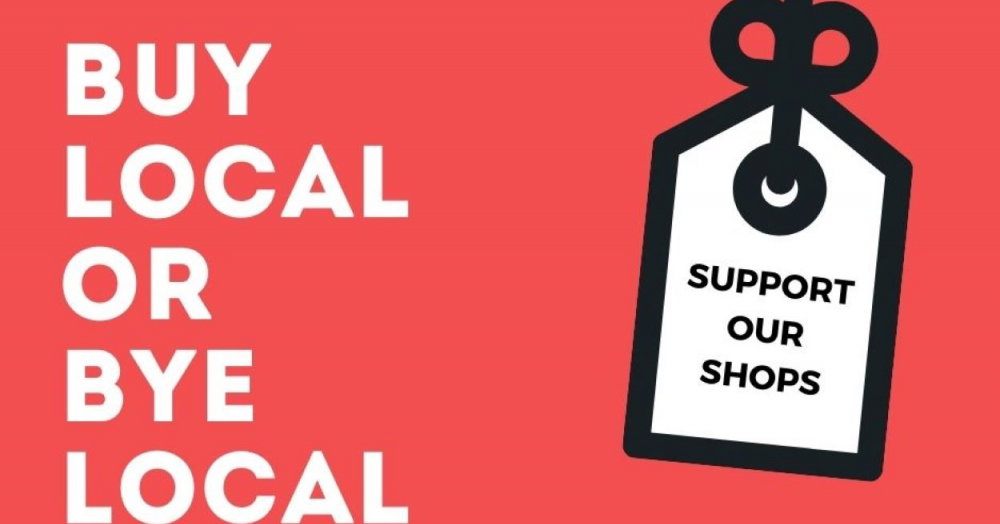
4 Reasons Why Attleborough and East Harling Shoppers Should Back Small Business Saturday
In this three-minute read, we look at the crucial role small businesses play in bringing prosperity and personality to our high streets.
Small businesses across Attleborough and East Harling have played a vital part in helping our community to get through the pandemic, so it’s no wonder that many of us are feeling a lot of love for local firms right now.
A new survey has found 59% of Brits say they support local businesses now more than they did pre-Covid-19.
The research, commissioned by American Express and Small Business Saturday UK, highlights the significant contribution small businesses have made in 2020.
It’s not been easy to keep calm and carry on amid lockdowns and tier restrictions, and for many small firms, it has taken sweat and tears to keep the wolves from the door.
But the good news is that many of these local enterprises are still standing, and you can do your bit for them on Small Business Saturday (5 December).
On this date, people in Attleborough and East Harling and across the country are being urged to purchase goods and/or services from local businesses. (If you can’t do it in person, you could do it online).
Last year, some 17.6 million people backed the cause by choosing to shop small on Small Business Saturday, spending about £800 million. Organisers are hoping for similar success – albeit in more challenging circumstances – this year.
Here are four reasons why you should back small businesses on Saturday, 5 December – and the rest of the year too.
Personality – Independent businesses bring vibrancy and creativity to villages and towns. Without them, high streets are sterile and non-descript. By supporting local firms, you’ll be ensuring our shopping areas have energy and sparkle.
Better customer service – Often, small businesses offer better customer service than their larger competitors. This is because the owner is never far away from the action – unlike a big chain, where the boss is in a swanky HQ hundreds of miles away.
Prosperity – Small businesses employ local people and draw on the services of other local firms such as accountants, builders, and cleaners. They keep the wheels of the local economy turning.
Say thank you – Most small business owners are decent people who are proud of their local community. Over the past nine months, small businesses have helped out in all sorts of ways, such as delivering essentials to the homes of the vulnerable, pivoting to make PPE, or donating to food banks. A little bit of recognition can go a long way.
Here at Millbanks, we’d like to give a big shout out to the local businesses who have gone above and beyond during this pandemic.
2020 has been tough on all of us, and now, more than ever, we need to work together as a community. At Millbanks we’re committed to supporting the people and communities we serve.
Copyright 2020 Millbanks of Attleborough, Norfolk