Consumer Spending Linked to Housing Market Confidence
In this short article we look at how Consumer High Street Spending is linked to Housing Market Confidence
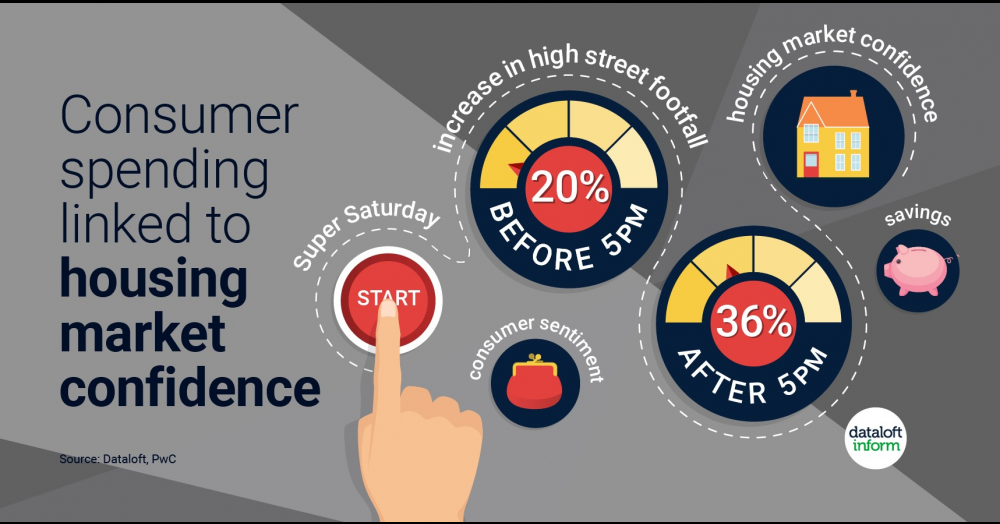
- Super Saturday, marking the reopening of hairdressers, pubs, bars, cafes and restaurants in England, saw an increase in high street footfall. PwC reports on money in consumers’ pockets – consumer spending trends are closely linked to housing market confidence.
- There was a 20% weekly increase in footfall on Saturday and after 5pm this rose to 36%. However, overall number of visits to the high street in England is down 56% on last year.
- PwC reported an increase in consumer sentiment in June, the majority of households so far unaffected financially and 1 in 5 households are saving money.
- With more money in consumers’ pockets, VAT reductions for the hospitality industry, creation of the eat out to help scheme, we hope high street footfall will continue to increase. However, much hangs on employment levels after furlough ends in October. Source: Dataloft, PwC
- Check the infographics library for a single jpeg of this infographic.