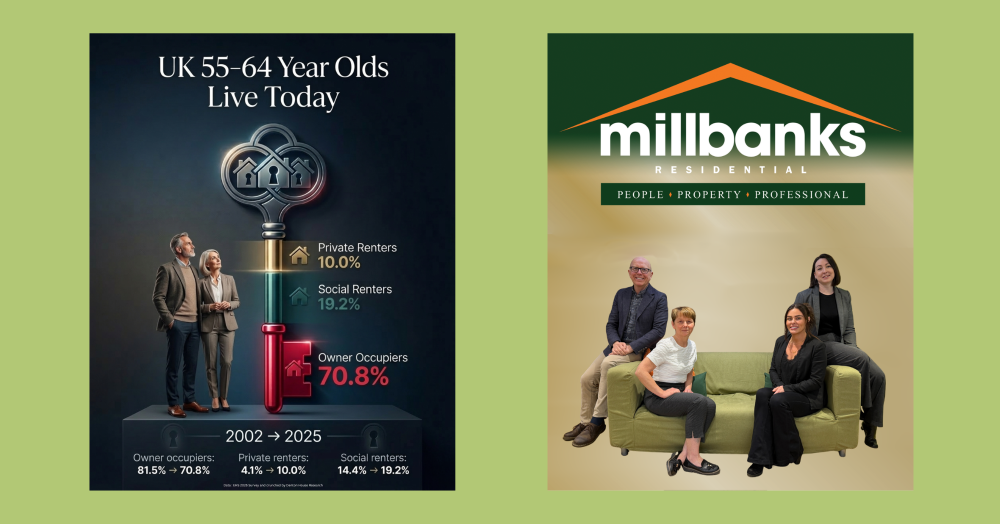
How 55 to 64 years old live in the UK
The way people aged 55 to 64 live today tells a much bigger story than you might expect. Beneath the headline figures lies a quiet shift in homeownership, mortgages and renting that has been decades in the making. To see what’s really changed, and why it matters, read on.
The way people aged 55 to 64 live in the UK has changed noticeably over the past two decades, and when you look deeper into the numbers the story becomes even more interesting.
In 2002, 81.5% of UK people in this age group owned their home. Yet that ownership was split between two very different groups. 46.5% owned their home outright, while 34.7% still had a mortgage.
By 2025, overall UK homeownership for this age group has fallen to 70.8%. However, the shift sits mostly in the mortgage numbers. Those owning outright has remained broadly similar at 45.9%, yet the proportion owning with a mortgage has fallen quite significantly to 24.9%.
A large part of this change links back to what happened in the housing market between roughly 2005 and 2010. Many people who would normally have bought their first home in their late 20s or early 30s struggled to get onto the property ladder because of the credit crunch, tighter mortgage rules and rising house prices. Twenty years later, that ripple effect is now showing up in these statistics.
At the same time, renting later in life has become more common. Private renting has more than doubled from 4.1% in 2002 to 10.0% today, while social renting has also increased from 14.4% to 19.2%.
Put simply, fewer people from that generation managed to buy homes earlier in life, and that shift is now visible in how people aged 55 to 64 are living today. These wider national trends also play a role in shaping the housing dynamics we see in the local property market here in Attleborough.
Does anything surprise you with these numbers`?