Wimbledon – prizes to properties

Wimbledon – prizes to properties

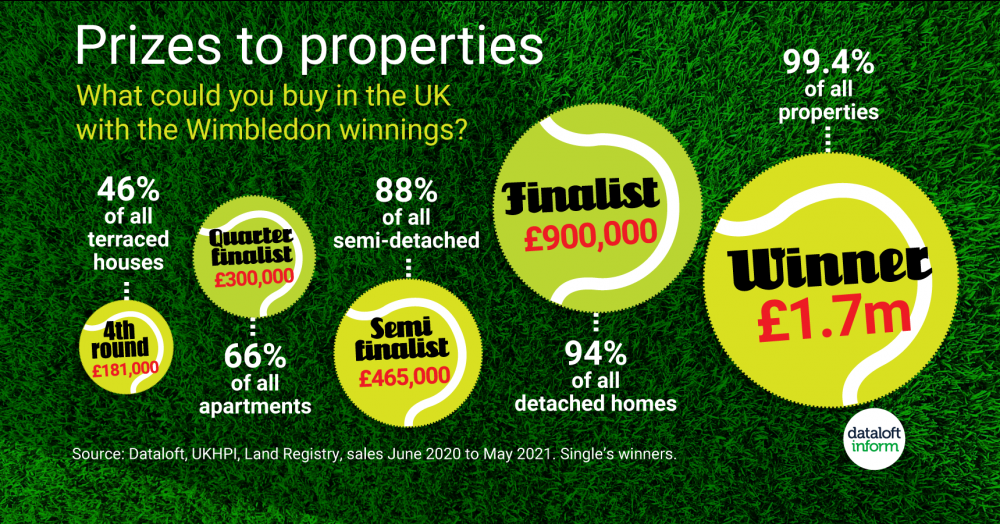
In this speed read article, we take a look at what this year's prize money at the Wimbledon Tennis championships means in terms of property investment across England and Wales

  • The 134th Wimbledon Championships is underway, a suite of new champions set to be crowned in a glorious weekend of sporting action.
  • While the average price of a property across England and Wales has risen by 10% since 2019, at £35 million the total prize pot for Wimbledon is 11% lower.
  • If players seek to invest their money, in property terms their prize money goes a long way. All but 0.6% of property sales over the past year have been within the winners budget of £1.7 million, all but 3.2% sold for the runners-up.
  • Even for those exiting in the 4th round, 30% of the market across England and Wales sold within their £181,000 prize pot.
  • Source: Dataloft, UKHPI, Land Registry, based on sales June 2020 to May 2021. Single's winners.


Get in touch with us

Following on from the Chancellor’s Autumn Budget, this article breaks down what the new tax measures really mean for Attleborough. With the feared £500,000 property tax dropped and a targeted Mansion Tax on £2m-plus properties introduced, I explore the likely impact on local homeowners, landlords, and tenants, separating headlines from reality.

This data shows a clear north–south split in UK housing supply. Homes for sale are rising across London and the South, while much of the North is seeing stock fall. The contrast raises questions about affordability, confidence, and whether higher supply in the South could limit house price growth into 2026.

Some homes sell swiftly while others linger, quietly slipping from view. The gap isn’t chance, it’s sellability. Price, presentation, and guidance decide who wins attention early and who stalls. Understanding what makes a home irresistible can turn uncertainty into momentum.

This heat map uses census data to show where Attleborough residents work longer hours, revealing clear differences in working patterns across the town. By understanding how work-life balance varies between neighbourhoods, we gain useful insight into local lifestyles and the factors shaping our community.